
The feud reached its peak when Musk made explosive allegations about Trump's connection to disgraced financier Jeffrey Epstein, marking a dramatic escalation in their increasingly personal conflict.

Of the 5 lakh women who were deemed ineligible, 1.5 lakh were found to be above the age of 65, while 1.6 lakh either had a four-wheeler or were beneficiaries of other government schemes like the Namo Shetkari Yojana, the official said.

Kharif crops were sown in only 4.15 lakh hectares against the target of 28.27 lakh hectares till July 21 or only in 14.71 per cent of the arable land.

'The market's nervousness ahead of anticipated US tariffs has led to a significant downturn in Indian equities.'

The Union government's fiscal deficit works out to be Rs 5.47 lakh crore or 36.3 per cent of the budget estimates at the end of October 2021 on the back of improvement in revenue collection, according to the data released by the Controller General of Accounts (CGA) on Tuesday. The deficit figures in the current fiscal appear better than the previous financial year when the gap between expenditure and revenue had soared to 119.7 per cent of the last year's Budget Estimates (BE) mainly on account of a jump in expenditure to deal with the COVID-19 pandemic. In absolute terms, the fiscal deficit was Rs 5,47,026 crore at the end of October, the CGA said.

The banking system's liquidity slipped into deficit for the first time in the current financial year (2023-24) due to the imposition of the Incremental Cash Reserve Ratio (I-CRR) for banks and outflows from goods and services tax (GST) payments, according to dealers. Reserve Bank of India (RBI) data shows it injected Rs 23,644 crore on August 21. The last time liquidity was in deficit was on March 27, when the RBI injected Rs 45,575 crore.

'We need to be very vigilant as we are passing through some fraught times.'

Fiscal deficit for 2020-21 was at 9.3 per cent of the gross domestic product (GDP), lower than 9.5 per cent estimated by the finance ministry in the revised Budget estimates, according to the CGA data. Unveiling the revenue-expenditure data of the Union government for 2020-21, the Controller General of Accounts (CGA) on Monday said that the revenue deficit at the end of the fiscal was 7.42 per cent.

The government has budgeted for total expenditure of Rs 34.83 lakh crore or 6.8 per cent of GDP. While the net tax revenue rose from Rs 5,75,697 crore in October 2020 to Rs 10,53,135 crore till October 2021, a growth of 82.93 per cent annualized, total expenditure rose only by 9.95 per cent, led by infra spending to Rs 18,26,725 crore from Rs 16,61,454 crore during the same period, the RBI said in the financial stability report.
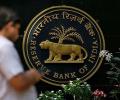
The Reserve Bank of India's (RBI's) $10 billion US dollar-rupee buy-sell swap auction for three years received bids worth $16.23 billion on Friday, reflecting robust demand amid persistent liquidity deficit in the banking system. This was the second swap auction by the central bank after it infused $5 billion via six month-swap on January 31.

"The new structure will substantially reduce taxes on the middle class and leave more money in their hands, boosting household consumption, savings and investment," Sitharaman said presenting what was dubbed as 'reformist' budget for the next fiscal in Lok Sabha.

India's exports recorded a flat growth of 0.59 per cent to $31.99 billion in November, even as trade deficit widened to $23.89 billion during the month, according to the data released by the government on Thursday. Exports stood at $31.8 billion in November last year. Imports rose by 5.37 per cent to $55.88 billion in November as compared to $53.03 billion in the corresponding month a year ago, the data showed. During April-November 2022, exports rose by 11 per cent to $295.26 billion as against $265.77 billion in the same month last year.

With short-term rates firming up due to tight liquidity conditions, Indian corporates are opting to borrow long term to take advantage of the attractive rates by locking them in these uncertain times. The banking system has a liquidity deficit of over Rs 2 trillion. According to market participants, engineering conglomerate Larsen & Toubro (L&T) raised Rs 1,500 crore through 10-year bonds in December 2024.
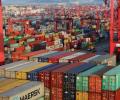
India's exports in January dipped by 6.58 per cent to $32.91 billion, as against $35.23 billion in the same month last year, according to the data released by the commerce ministry on Wednesday. Trade deficit in January stood at $17.75 billion.

It will be the second Budget of the Modi 3.0 government and eighth straight Budget for Nirmala Sitharaman, rare in Indian polity.

'It has also outlived its initial purpose of reducing physical gold imports.'
The Centre could better its fiscal deficit at 6.6 per cent of GDP in this financial year on stronger-than-expected revenue buoyancy, even if the budgeted disinvestment target is not met, Fitch Ratings has said. The international rating agency had last week kept the sovereign rating unchanged at 'BBB-' with a negative outlook, and said that the risks to India's medium-term growth outlook are narrowing with rapid economic recovery from the pandemic and easing financial sector pressures. In an email interview with PTI, Fitch Ratings Director (Asia-Pacific Sovereigns) Jeremy Zook said the two key positive triggers that could lead to a revision of the outlook to stable are implementation of a credible medium-term fiscal strategy to lower debt burden and higher medium-term investment and growth rates without the creation of macroeconomic imbalances, such as from successful structural reform implementation and a healthier financial sector.

Banks are set to make treasury gains in the fourth quarter of the current financial year (2024-25) as the yield on government bonds has softened so far this quarter, driven by strong inflows into the debt segment, market participants said. The yield on the 10-year benchmark government bond fell 8 basis points (bps) in the previous week - the steepest weekly decline in four months, since November 30, 2024 - to settle at 6.62 per cent.

Amid liquidity tightness in the banking system, certificate of deposit (CD) rates topped 8 per cent for some smaller banks, with rates remaining on the higher side for derivatives loss-hit IndusInd Bank. On Thursday, CSB Bank raised Rs 100 crore via one-year CDs at 8.5 per cent, while Utkarsh Small Finance Bank issued three-month CDs at 8.05 per cent to raise Rs 50 crore.

In an address at an election rally in this southern-most part of Mizoram bordering Myanmar, Singh said violence is no solution to any problem and the two communities in Manipur must talk to each other to improve the situation in the troubled state.

Chief Economic Advisor V Anantha Nageswaran on Thursday said the economy is expected to grow at 6.5 per cent in the current fiscal notwithstanding deficient rains in August. India recorded economic growth of 7.8 per cent in the April-June quarter of 2023-24 against 13.1 per cent in the year-ago period. India's economy in Q1 grew at the fastest pace in a year, on the shoulders of a boost in capital expenditure both at central and state levels, along with stronger consumption demand, especially in rural areas, and improved performance in the services sector, he said.
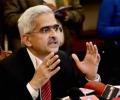
Experts disagree with the idea and the Reserve Bank of India (RBI), which has the sole right to print money, is not comfortable with it as well.

While the capital spending is being maintained at 3.1 per cent of the GDP, a little more would have boosted economic growth even further, suggests Rajiv Memani.

The government has revised gold import data, bringing down numbers for November by $5 billion to $9.84 billion, possibly to rectify double accounting of inbound shipments. According to revised data of the commerce ministry arm Directorate General of Commercial Intelligence and Statistics (DGCIS), gold import numbers have been slashed since April 2024, revealing excess imports of about $11.7 billion during the first eight months of 2024-25.

Finance Minister Nirmala Sitharaman on Monday said the government estimates fiscal deficit of 6.8 per cent of the gross domestic product (GDP) in the next financial year beginning April 1. However, the fiscal deficit in 2020-21 is estimated to soar up to 9.5 per cent due to rise in expenditure on account of the outbreak of COVID-19 and moderation in revenue during this fiscal year.

Budget 2025-26 delivers a carefully calibrated strategy-stimulating demand and investment while keeping fiscal discipline intact. In an environment marked by global trade disruptions, and a softening in urban consumption, Finance Minister Nirmala Sitharaman has taken a measured approach.

Whether she will pare the fiscal deficit target of 5.1 per cent of GDP, using the record dividend received from the RBI, or expand flagship government programmes will be keenly watched.

The heightened global uncertainty due to the US "reciprocal tariffs" on India may cause near-term corrections and market turbulence, but the long-term outlook remains constructive, market experts said on Thursday. The US has announced 27 per cent reciprocal tariffs on India, citing high import duties imposed by New Delhi on American goods.

Equity benchmark indices Sensex and Nifty rallied for the third session on the trot, helped by a rally in global markets after lower-than-expected consumer inflation in the US ignited hopes of more rate cuts by the Federal Reserve. The 30-share BSE index climbed 318.74 points or 0.42 per cent to revisit 77,000 level at 77,042.82.

All sectoral indices ended lower. BSE Telecommunication tanked 2.18 per cent, metal (1.77 per cent), auto (1.70 per cent), energy (1.64 per cent), oil & gas (1.59 per cent), commodities (1.39 per cent) and financial services (1.37 per cent) were the major laggards.

India's economic growth slowed to near two-year low of 5.4 per cent in the July-September quarter of this fiscal due to poor performance of manufacturing and mining sectors, but the country continued to remain the fastest-growing large economy, data showed on Friday. The gross domestic product (GDP) had expanded by 8.1 per cent in the July-September quarter of 2023-24 fiscal. The previous low level of GDP growth at 4.3 per cent was recorded in the third quarter (October-December 2022) of financial year 2022-23.

'We are not incentivising the old tax scheme. These taxpayers will also shift to the new regime after comparison.'

Since Sanjay Malhotra took office as governor in December, the Reserve Bank of India (RBI) has adopted a more accommodative stance, which bodes well for banking and the economy as they navigate a growth slowdown, according to analysts.

Brendan Lynch, the assistant US trade representative for South and Central Asia, will pay a five-day visit to India beginning Tuesday, days before US President Donald Trump's tit-for-tat tariff kicks in. The senior US trade official is expected to hold talks with Commerce Minister Piyush Goyal besides meeting a number of senior Indian officials.

Investors should tilt their portfolios towards domestic-facing defensive sectors, which should help provide stability and shield them from geopolitical and tariff risks.

'If it doesn't, it will continue with measures to infuse liquidity, signalling a new cycle,' predicts Tamal Bandyopadhyay.

Trump may temper his approach from time to time, but to think that he will change his basic philosophy is delusional, asserts T T Ram Mohan.

'There's a misconception that all Rs 1 lakh crore will be spent immediately, leading to higher consumption of FMCG goods, travel, and vehicle purchases.' 'While some of this money will go toward consumption, not all of it will.' 'The impact depends on where people deploy their savings.'

Reserve Bank of India Governor Shaktikanta Das on Friday said the country's economy is an island of stability despite two Black Swan events and multiple shocks. "In an ocean of high turbulence and uncertainty, Indian economy is an island of macroeconomic and financial stability," Das told reporters during the post policy press conference. He said the financial stability, macroeconomic stability and resilience of growth is being witnessed despite two Black Swan events happening one after the other and multiple shocks.

From the 30 blue-chip pack, Mahindra & Mahindra, IndusInd Bank, Bajaj Finance, Tata Motors, Bajaj Finserv, Nestle and ICICI Bank were the biggest gainers. State Bank of India, Tata Steel, Adani Ports, Zomato, UltraTech Cement and HCL Tech were among the laggards.
